
Formalization using proof assistants is the most thorough error-detector available for your own proof, and a machine-checked statement is unambiguous. What remains to be checked is that it faithfully encodes the informal one. Lean is a proof assistant based on dependent type theory. Its community library, Mathlib, covers a large part of undergraduate and graduate mathematics. The automatic formalization of a research paper typically produces a huge amount of Lean code to bridge the gap between the theorems of the paper and Mathlib. Incorporating this code into Mathlib, which is designed to be general and stable, is not realistic. The Lean Pool project fills this gap: it is a large repository designed to host formalizations of research papers and to keep them compatible with new versions of Lean and Mathlib. The Palomar project is different: it is a registry of formalized proofs. The rise of artificial intelligence has made it possible to automate formalization. Combined with this automation, dependent type theory is now making possible, in terms of structuralism, what the Bourbaki project and category theory could not do in the twentieth century, because the effort required was beyond human reach.
Here is the timeline of a modest personal experience in 2026.
- August 2026
Release of my latest work on Poincaré for Ginibre
arXiv:2608.19358v2 - September/October 2026
Automated Lean formalization of the manuscript
Blog post · GitHub - October 2026
Registration in the Palomar registry of formalizations
PALOMAR-2026-10-09-000001 - November 2026
Talks and lectures
Blog post · Lecture notes · Talk slides - November 2026
Inclusion of the formalized proofs in the Lean Pool
Accepted inclusion proposal
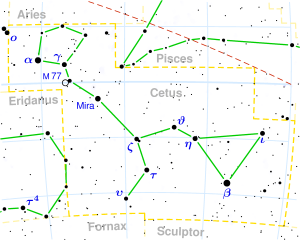
More recently, I have conducted the automatic formalization of an already published paper of mine written in collaboration with Max Fathi. It was ambitious because the content combines advanced topics such as stochastic analysis, stochastic calculus, functional analysis, and differential geometry. It helped to discover substantial problems that were then corrected in an arXiv update, more precisely and for instance in the assumptions and in the conclusions of theorems. Here again, the Lean formalization code was then registered on Palomar, and submitted to Lean Pool. This experiment was inspiring and led me to create a project on Tau Ceti on Markov Diffusion Operators, with a substantial initial contribution around Markov triples. Feel free to contribute! This will save us time and effort in the future.
- Lean code on GitHub
Public personal repository - Update of arXiv
On cutoff via rigidity for high dimensional curved diffusions (2412.15969v5) - Registration on Palomar
PALOMAR-2026-11-21-000009 - Submission to Lean Pool
Ongoing step by step integration - Project on Tau Ceti
Ongoing step by step integration
Even more recently, I carried out the automatic formalization in Lean of my Master 1 French lecture notes on stochastic processes. This was quite ambitious because the lecture notes contain a huge number of statements, not only in Lemmas/Theorems/Corollaries. As always, automation does not remove hours of deep thinking and decision-making. This helped me to improve the quality of the lecture notes.
The formalization of several papers raises the question of creating or using a library, possibly modeled on research monographs. The Tau Ceti project is designed precisely for this purpose. Prove2Me offers yet another way to organize a collaborative effort by human and artificial agents: each paper or textbook is split into many small Lean statements that anyone can tackle, following a shared roadmap. It was used for the formalization of the Last Theorem of Fermat.
At the other extreme from Mathlib, and beyond Lean Pool, the merely-true repository accepts any formalization that compiles, with no human review and no guarantee of maintenance.
The Palomar project, named after the Palomar Observatory Sky Survey, is a public registry of Lean-verified mathematical results. It provides a durable, searchable record of formalizations without certifying mathematical novelty or relevance. Each entry archives an immutable snapshot whose proof, cleanly separated from the theorem statement, is checked by two independent kernels.
We can hope for a gradual simplification of this complex ecosystem. The rise of automation and formalization risks leaving behind many mathematicians who are not particularly familiar with computers. The most plausible path forward is a division of labor: programmer mathematicians will organize most of the zone between Mathlib and active research, while non-programmer mathematicians will increasingly rely on highly assisted, near push-button formalization tools.
| Project | Nature | Launched / maintained by | Accepted content | Review | Updates of Lean and Mathlib |
|---|---|---|---|---|---|
| Mathlib | Unified general library | Lean community maintainers, supported by the Lean FRO | General mathematics meeting the library standards | Demanding human review | Continuously maintained by the community |
| Tau Ceti | Unified library built on Mathlib, aiming at all areas of mathematics | Incubated by the Lean FRO and the Mathlib Initiative, with academic and industry partners | Formalizations written by agents along human-curated roadmaps | Roadmaps approved by humans; code reviewed by agents against public rubrics | Follows Mathlib, with tagged releases |
| Lean Pool | Single repository of mostly independent projects | Vasily Ilin and Justin Asher (UW Lean Hackathon) | Completed formalizations, written by humans or machines, under Apache-2.0 or MIT license | Strict CI (no sorry, standard axioms only, Mathlib linters) and language model review of relevance | Projects kept compatible with the latest versions |
| merely-true | Open repository of machine-generated mathematics | Proposed by Kim Morrison and Johan Commelin | Formalizations compiling without sorry or additional axioms, from identified contributors. | No human review, automatic merge after CI | Files that no longer compile are deleted |
| Palomar | Registry pointing to frozen commits of GitHub repositories | Incubated by the Lean FRO and ICARM; maintainers T. Tao, M. Ballard, N. Guillen, J. de Dios | Formalized results of research interest, by humans or machines | Mechanical check with independent kernels and language model review; no human review | None: entries stay frozen, new versions can be submitted |
| Prove2Me | Collaborative platform splitting papers and textbooks into missions | Prove2Me team (Columbia University) | Lean statements from papers, textbooks and open problems, proved by agents or humans | Lean verification; some missions reviewed | Results published in the Formalpedia library |
Do you know how prove2me (https://prove2.me/) fits into this ecosystem?
Thanks Igor for your feedback. I have added something in this direction.
Great, thanks for the update, the table is very interesting!