This micro post is about a basic question raised by a colleague, a number theorist, who is not very familiar with probability theory. The answer is simple but important.
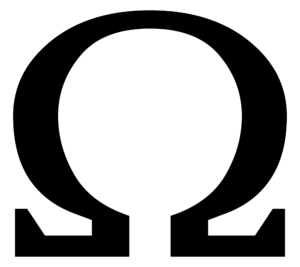
Let $X$ be a random variable defined on a probability space $(\Omega,\mathcal{A},\mathbb{P})$ and taking values in a set $E$ equipped with a $\sigma$-field $\mathcal{E}$. Let $\mu=\mathbb{P}\circ X^{-1}$ be the law of $X$.
Let $F\in\mathcal{E}$ be such that $\mathbb{P}(X\in F) > 0$.
By definition, $\mu(F)=\mathbb{P}(X\in F)=\mathbb{P}(A)$ where $A=X^{-1}(F)\in\mathcal{A}$.
Restriction and conditioning. The restriction of $X$ to $A$ is a random variable, denoted here $X_A$, defined on the probability space $(A,\mathcal{A}_A,\mathbb{P}_A)$, where $\mathcal{A}_A=\mathcal{A}\cap A$ and $\mathbb{P}_A(B)=\mathbb{P}(B)/\mathbb{P}(A)$ for all $B\in\mathcal{A}_A$, and taking values in $E$ equipped with $\mathcal{E}$.
The random variable $X_A:A\to E$ follows the conditional law $\mu(\cdot\mid F)$, namely the probability measure defined by $G\in\mathcal{E}\mapsto \mu(G\cap F)/\mu(F)$. Indeed, for all $G\in\mathcal{E}$, \begin{align*} \mathbb{P}_A(X_A\in G) &=\mathbb{P}_A(X_A^{-1}(G))\\ &=\mathbb{P}(A\cap X^{-1}(G))/\mathbb{P}(A)\\ &=\mathbb{P}(X^{-1}(F\cap G))/\mathbb{P}(A)\\ &=\mu(F\cap G)/\mu(F)=\mu(G\mid F). \end{align*} Alternatively, if $X_A$ is seen as taking values in $F$, then its law is $H\in\mathcal{E}_F=\mathcal{E}\cap F\mapsto\frac{\mu(H)}{\mu(F)}$.
Implicit culture. The notion of restriction is standard in mathematics. So why do probabilists not use it for random variables? The reason is that they prefer to avoid reducing the initial space, which is often implicit and imposed by the presence of other random variables. They prefer to consider the conditional law $\mu(\cdot\mid F)$, which is on the arrival or value space, and (if needed) to introduce a new random variable $Y$ that follows this law. Concerning the initial space, this amounts to implicitly enlarging the space, canonically by taking a product, instead of reducing it. We could also say that the underlying probability space is a choice that we make globally, not locally, since it has to encompass all the possibilities. The art of juggling with explicit laws and implicit spaces!
Further reading.
- Probability space
On this blog - 2019-11-11